
Most new cat owners walk into the experience thinking a litter box and a bag of kibble will cover it. They are wrong, and their cats pay the price. According to the American Pet Products Association, Americans spent over $150 billion on their pets in 2023, yet veterinary data consistently shows that preventable health issues remain the top reason cats are surrendered or seen in emergency clinics. A solid cat care checklist is not optional for a new cat owner. It is the difference between a thriving feline companion and a stressed, sick animal that costs you far more in the long run.
Table of Contents
- Quick Takeaways
- Before Your Cat Comes Home
- Feline Essentials: The Gear That Actually Matters
- Nutrition and Feeding Fundamentals
- Health and Veterinary Care
- Behavioral Wellbeing and Enrichment
- Grooming: Your Checklist for a Clean, Healthy Cat
- Common New Owner Mistakes and How to Avoid Them
- Frequently Asked Questions
- References
Quick Takeaways
Key Insight |
Explanation |
|---|---|
The litter box rule is 1+1 |
You need one litter box per cat plus one extra. A single box for one cat causes stress and inappropriate elimination behaviors. |
Dry food alone is not sufficient |
Cats have a low thirst drive and need moisture in their diet. Wet food or a water fountain reduces the risk of urinary tract disease significantly. |
Vertical space is a health requirement |
Cats are wired to climb and observe from height. Cat trees and wall shelves reduce anxiety and territorial stress, especially in multi-cat homes. |
Kitten-proofing is not the same as baby-proofing |
Cats target cords, toxic houseplants, and small openings that babies never reach. Many common houseplants like lilies are lethal to cats. |
A vet visit within the first week is non-negotiable |
Baseline health data established early means problems get caught before they become expensive emergencies. |
Microchipping is the single best recovery tool |
Collars fall off. A microchip is permanent identification that reunites lost cats with owners in the majority of recovery cases. |
Interactive play is daily medicine |
Two 15-minute play sessions per day reduces destructive behavior, obesity risk, and stress-related illness in indoor cats. |
Before Your Cat Comes Home
The work begins before you open the carrier. Setting up your space correctly determines how quickly your new cat settles, and a cat that settles quickly is a cat that bonds faster and develops fewer behavioral problems. Do not skip this phase because you are excited to get the animal home.
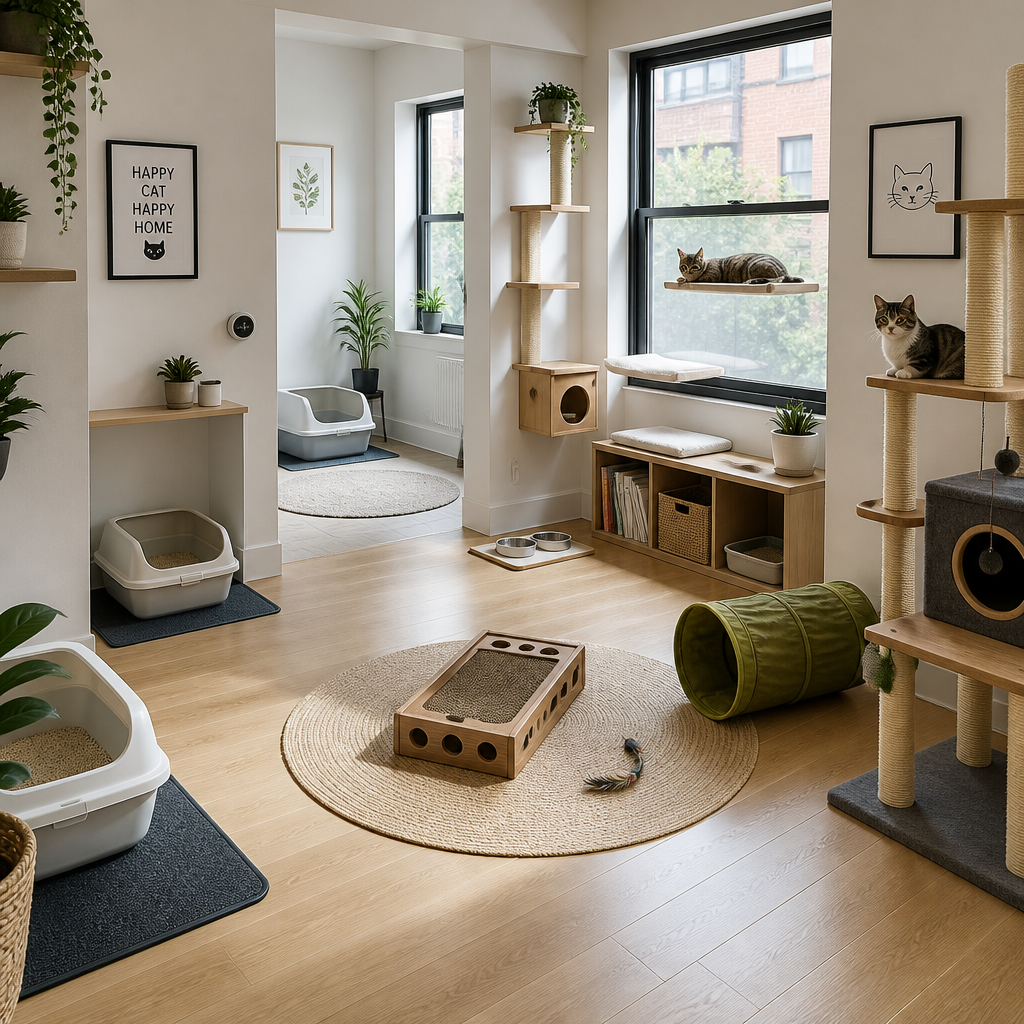
Start by designating a single quiet room as the introduction zone. This is where your cat will spend the first three to seven days. Covering the entire house on day one is overwhelming for most cats, particularly rescues with unknown histories. A smaller space gives your new cat a territory it can actually comprehend and claim.
Room Setup Checklist Before Arrival
Place the litter box on one end of the room and the food and water bowls on the opposite end. Cats will not eat near their toilet, and forcing it causes food refusal. Include at least one hiding spot such as a covered bed or a cardboard box on its side. A new cat owner who skips the hiding spot often misinterprets normal decompression behavior as illness.
Remove or secure all electrical cords in the introduction room. Check the room for toxic plants. The ASPCA maintains a full list of plants toxic to cats, and common offenders include pothos, peace lily, and any species in the lily family. A single lily petal can cause acute kidney failure in cats. This is not an exaggeration.
Pro tip: Put an unwashed piece of your clothing in the introduction room before your cat arrives. Your scent without the visual of a large unfamiliar human helps your cat start associating your smell with safety before you two have even interacted in person.

Feline Essentials: The Gear That Actually Matters
The pet industry sells an enormous amount of gear that cats do not need or use. As a new cat owner, your job is to separate the genuine feline essentials from the clever marketing. This list is built on what cats actually use and what keeps them healthy, not what looks good on a shelf.
The Non-Negotiable Gear List
Start with a hard-sided carrier. Soft carriers collapse under stress and give your cat zero sense of security. A hard carrier with a removable top allows your veterinarian to examine your cat without dragging it out, which reduces trauma for everyone involved. Place a worn t-shirt inside it and leave the carrier out as furniture so your cat never associates it exclusively with vet trips.
Invest in a cat tree that is tall enough to reach at least eye level when you are standing. Cheap, wobbly cat trees get ignored. A stable tree with a sisal post, a hammock level, and an elevated perch covers scratching, resting, and observation needs in one piece of furniture. This is not a luxury item. It is behavioral infrastructure.
Your water setup matters more than most new owners realize. Cats descended from desert-dwelling ancestors and instinctively distrust still water. A recirculating water fountain dramatically increases water intake compared to a static bowl. Adequate hydration is the single most effective prevention tool against feline lower urinary tract disease, which affects roughly one in ten cats over a lifetime.
Gear Comparison: What Works vs. What Wastes Money
Item Category |
Worth Buying |
Skip or Delay |
|---|---|---|
Carrier |
Hard-sided with removable top |
Fabric zipper bags for regular vet use |
Scratching |
Tall sisal post or cat tree (min. 90 cm) |
Horizontal carpet pads alone |
Water |
Stainless steel recirculating fountain |
Plastic bowls (harbor bacteria, cause feline acne) |
Litter Box |
Large uncovered box with high sides |
Covered boxes with filters (trap odor for the cat) |
Bedding |
Washable self-warming pad placed near a sunny window |
Elaborate themed beds most cats ignore |
Pro tip: Buy a litter box that is 1.5 times the length of your adult cat. Most commercially sold litter boxes are too small, which is why cats hang their backside over the edge. Oversized storage containers from a hardware store work perfectly and cost a fraction of the price of branded boxes.
Nutrition and Feeding Fundamentals
Cats are obligate carnivores. This is a biological fact with direct dietary consequences. They cannot synthesize taurine, arachidonic acid, or vitamin A from plant sources the way dogs and humans can. A diet insufficient in animal protein does not just leave them underfed. It causes cardiac disease, blindness, and reproductive failure over time.
The ongoing debate between dry and wet food has a clear winner for most cats: wet food as the dietary foundation. Dry food is calorie-dense and convenient, but it delivers moisture at roughly 10 percent of the food's content versus 70 to 80 percent for wet food. For a cat that will not drink from a bowl, dry food alone creates chronic mild dehydration that accumulates into real disease over years.
Reading a Cat Food Label Without Getting Fooled
The first ingredient must be a named animal protein. Chicken, turkey, salmon, and beef are clear. Avoid foods where the first ingredient is a grain, a by-product meal without a named animal source, or water. The word "flavored" on a label means the food contains almost no actual protein from that source. It means a flavor additive was used.
Look for foods that meet AAFCO (Association of American Feed Control Officials) nutritional standards for your cat's life stage. A food labeled "for all life stages" must meet kitten standards, which makes it appropriate for any adult cat as well. A food labeled "for adult maintenance" only is not adequate for kittens or pregnant cats.
"Cats require a minimum of 26 percent protein on a dry matter basis in their diet, and the source of that protein matters as much as the percentage." - Cornell Feline Health Center, College of Veterinary Medicine
Feeding Schedule Recommendations
Free-feeding dry food is the leading contributor to feline obesity, which now affects an estimated 59 percent of cats in the United States according to the Association for Pet Obesity Prevention. Scheduled meals, twice daily for adult cats, give you visibility into your cat's appetite, which is one of the earliest indicators of illness. A cat that misses a meal is a cat worth watching closely.
Health and Veterinary Care
Preventive care costs a fraction of emergency care. That statement is not motivational. It is arithmetic. A wellness exam plus core vaccinations runs between $100 and $200 in most markets. A urinary blockage emergency runs $1,500 to $3,000. The math is straightforward, and yet many new cat owners delay establishing veterinary care until their cat is already sick.
First-Year Veterinary Checklist
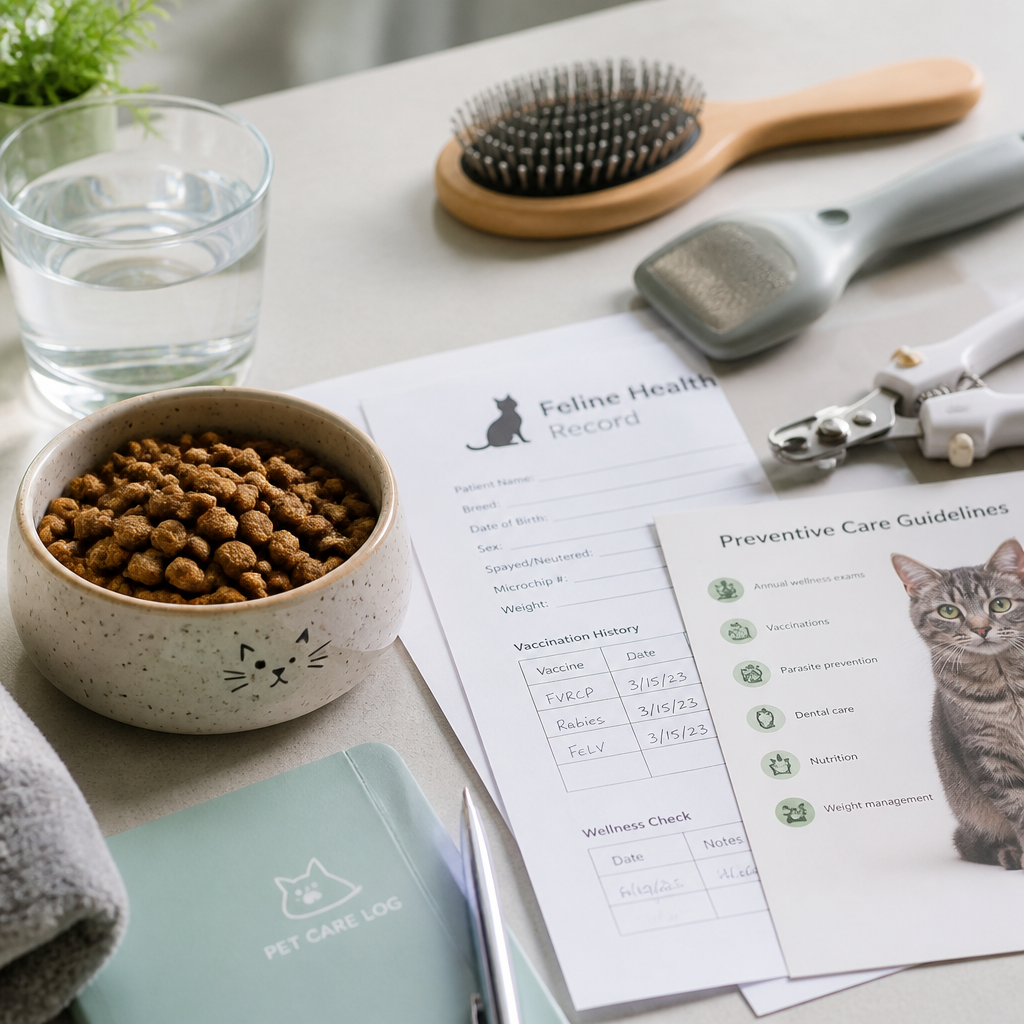
Book the first exam within seven days of bringing your cat home. Your vet will confirm the cat's baseline weight, check for parasites, assess dental development in kittens, and establish vaccination status. For kittens, core vaccines include feline panleukopenia (FPV), feline herpesvirus-1 (FHV-1), feline calicivirus (FCV), and rabies. These are not optional in most jurisdictions.
Get your cat microchipped at the first appointment if it was not already done by a rescue or breeder. According to a study published in the Journal of the American Veterinary Medical Association, microchipped cats were returned to owners at a rate more than 20 times higher than non-microchipped cats. Register the chip. An unregistered microchip is nearly useless.
Spay and Neuter Timing
Spaying females before their first heat cycle reduces the lifetime risk of mammary cancer by roughly 91 percent. Neutering males before six months significantly reduces roaming, spraying, and aggression. Most veterinarians recommend the procedure between four and six months for kittens. Early sterilization is one of the highest-impact decisions a new cat owner can make for long-term health outcomes.
Schedule annual wellness exams every year for the life of your cat. After age seven, most veterinarians recommend biannual exams because cats age approximately four human years for every calendar year in middle and senior life. Conditions like hyperthyroidism, kidney disease, and dental disease are common in senior cats and respond well to early detection.
Behavioral Wellbeing and Enrichment
Behavioral problems are the second most cited reason for cat relinquishment to shelters, after allergies. Most of those behavioral problems are entirely preventable with the right environment. Cats are not low-maintenance animals who are satisfied with a clean box and regular meals. They are hunters with complex cognitive and social needs that must be met daily.
Daily Enrichment Checklist
Every indoor cat needs a minimum of two structured play sessions per day, each lasting 15 minutes. Use a wand toy that mimics prey movement: slow stalking, erratic fleeing, and occasional freezing. Do not wave the toy randomly. Simulate a hunt. Cats that complete a hunt sequence including stalk, pounce, and catch followed by a small meal show significantly lower stress hormone levels in behavioral studies.
Window access to outdoor sights, sounds, and smells counts as enrichment. A bird feeder placed outside a window your cat can access provides hours of mental stimulation at minimal cost. If your living situation allows it, a screened "catio" enclosure offers outdoor sensory experience without the documented risks of free roaming, which include shortened lifespan, injury from vehicles, and disease exposure.
Litter Box Behavior as a Health Signal
Changes in litter box behavior are among the earliest warning signs of medical issues. A cat urinating outside the box is not being spiteful. It is either experiencing pain during urination and associating the box with that pain, or it has a behavioral stress response that needs investigation. Never punish litter box avoidance. Investigate it. Rule out medical causes first, then address environmental factors.
Grooming: Your Checklist for a Clean, Healthy Cat
Cats are self-groomers, but that does not mean your involvement ends there. A good grooming routine from a new cat owner catches health problems early, reduces shedding and hairball formation, and builds trust through positive touch experiences. Start grooming routines when your cat is young and it becomes a bonding activity rather than a battle.
Weekly Grooming Tasks
Brush short-haired cats at least twice a week and long-haired cats daily. Use a stainless-steel comb for long coats to prevent matting near the skin. A slicker brush works well for removing loose undercoat on short-haired breeds. Matting in long-haired cats is not just cosmetic. Severe mats pull the skin, cause pain, and can hide skin infections underneath.
Check ears weekly for dark discharge or odor, both of which indicate ear mites or infection. Look at the gums monthly. Healthy gum tissue is salmon pink. Pale, white, or yellow gums are a veterinary emergency regardless of other symptoms. Trim nails every two to three weeks using cat-specific nail clippers to prevent them from curling into the paw pads, which happens faster in older or less active cats.
Dental Care That Actually Gets Done
Dental disease affects an estimated 70 percent of cats over age three, according to the American Veterinary Dental Society. Daily tooth brushing with a cat-specific enzymatic toothpaste is the gold standard and the only method proven to meaningfully reduce plaque. If brushing is not possible, dental chews formulated to the Veterinary Oral Health Council standard, water additives, and dental diets provide moderate benefit. Do not use human toothpaste. Fluoride is toxic to cats.
Common New Owner Mistakes and How to Avoid Them
A common mistake is introducing a new cat to existing pets within the first 24 hours. Even confident cats need time to establish scent territory before they can read another animal's presence as non-threatening. Rushing introductions is the primary cause of lasting inter-pet conflict in households. Use a structured scent-swapping protocol over five to ten days before any visual or physical contact.
Another mistake is assuming a hiding cat is unhappy. Hiding is a normal decompression behavior, particularly in the first week. Forcing interaction with a hiding cat increases fear and delays bonding. Sit quietly near the hiding spot. Read a book. Speak softly. Let the cat make the first approach on its own timeline.
A third mistake, and one with genuine medical consequences, is feeding dog food to a cat in an emergency or as a temporary measure. Dog food lacks taurine at adequate levels for cats. A few days of this is not an emergency. Weeks of it causes dilated cardiomyopathy. Keep a dedicated cat food supply and do not rationalize substitutions.
Finally, new owners consistently underestimate the danger of certain common human foods. Onions, garlic, grapes, raisins, chocolate, xylitol, and macadamia nuts are all toxic to cats at doses far smaller than most people expect. Garlic and onion toxicity can cause hemolytic anemia in cats from a surprisingly small exposure. Keep these foods sealed and inaccessible, including cooked forms mixed into human dishes.
Frequently Asked Questions
How often should I take my cat to the vet if it seems healthy?
Annual wellness exams are the minimum for cats under seven years old. Once your cat reaches senior age, typically seven years and above for most breeds, biannual exams allow early detection of conditions like kidney disease and hyperthyroidism that progress quickly and respond well to intervention when caught early. A healthy-looking cat can still carry early-stage disease that only a blood panel or physical exam will reveal.
What is the best litter type for a new cat?
Unscented clumping clay litter is the most universally accepted option and the one most consistent with what cats encounter naturally. Heavily scented litters are designed for human preferences, not cat preferences. Cats have roughly 200 million scent receptors compared to 5 million in humans. What smells pleasant to you can be genuinely aversive to your cat and cause litter box avoidance. Start with unscented and only experiment with alternatives once your cat has established consistent habits.
Can I let my cat go outside?
The data on this is clear. Indoor-only cats live significantly longer, with median lifespans of 12 to 18 years compared to 2 to 5 years for free-roaming outdoor cats according to research compiled by the American Bird Conservancy. Outdoor access exposes cats to vehicle strikes, predators, infectious diseases, parasites, and toxins. Supervised outdoor access, a secured garden, or a catio enclosure captures the enrichment benefits without the mortality risk.
How do I know if my cat is sick if it hides its pain?
Cats are biologically programmed to mask illness as a survival mechanism. Early warning signs that most new owners miss include changes in water intake, subtle shifts in grooming habits, altered sleeping positions that avoid pressure on one area, decreased jump height, and any change in vocalization pattern. Keep a short weekly log of your cat's weight, food intake, and litter box output. Deviations from baseline catch illness earlier than behavioral observation alone.
Do cats need companions or are they fine alone?
It depends entirely on the individual cat and its history, but solitary indoor cats that are left alone for more than eight hours consistently show higher cortisol levels and more behavioral issues than cats with a companion. If you work full time and cannot provide daytime interaction, a second cat or even a confident cat-socialized dog provides companionship that reduces stress. Proper introductions matter enormously. A poorly introduced second cat can make things significantly worse, not better.
When should I be worried about my cat not eating?
Any cat that refuses food for more than 24 hours warrants a call to your veterinarian. Any cat that goes more than 48 hours without eating needs a same-day appointment. Cats develop hepatic lipidosis, a severe liver condition, from fat mobilization during even short fasting periods. This is especially true in overweight cats. Unlike dogs, cats cannot fast safely for extended periods without medical risk.
Have you recently brought home a new cat? Share what surprised you most about the experience and what you wish you had known before the first week.